
BPC-157 + TB-500 MAX-20
BPC-157 & TB-500 Peptide Blend|20 mg × 10 Vials
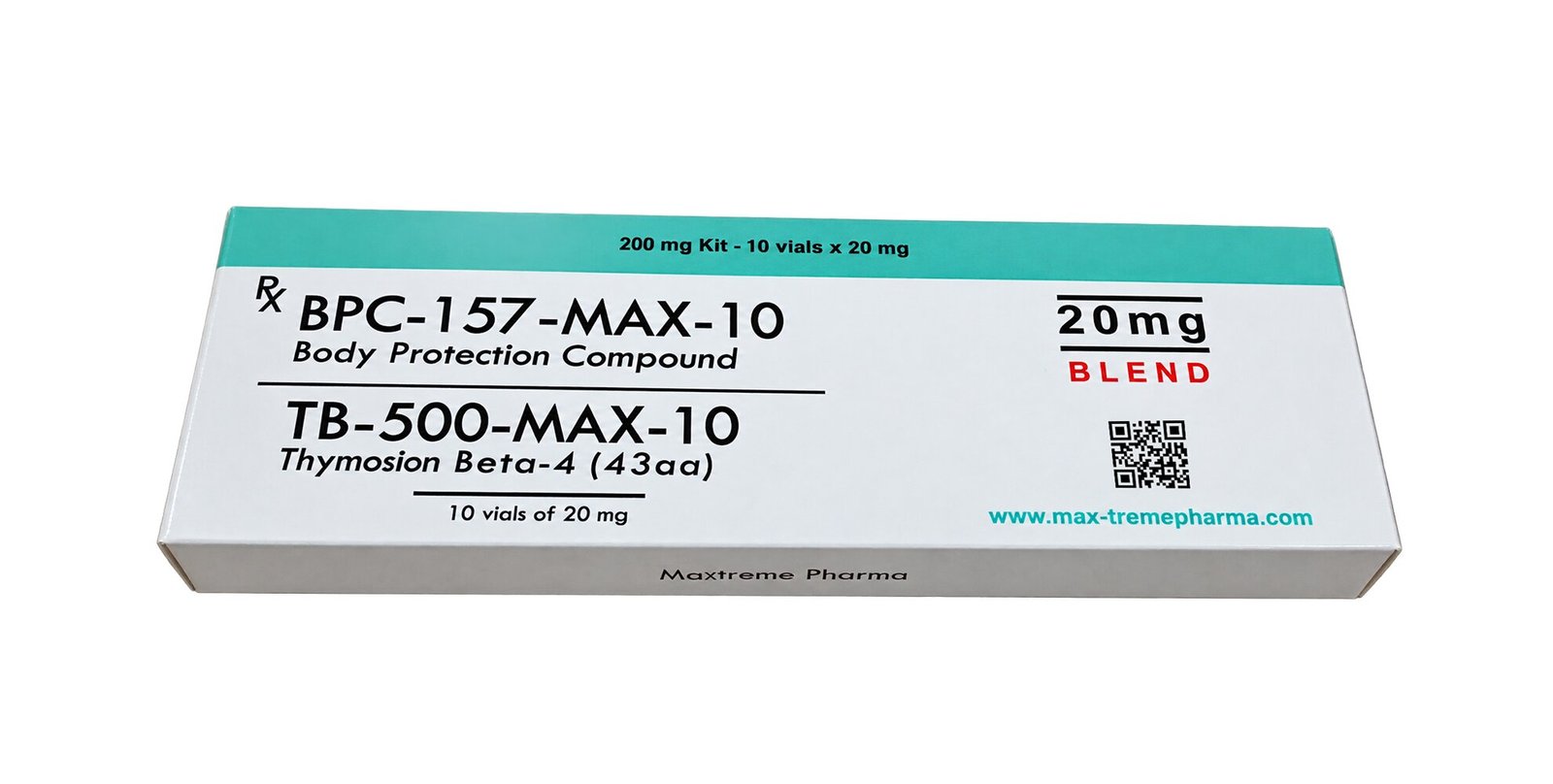
An experimental peptide blend combining BPC-157 (Body Protection Compound) and Thymosin Beta-4 (43aa), commonly referred to as TB-500, supplied in a convenient 10-vial kit.
Each vial contains 20 mg of the peptide blend, with 10 vials per kit, providing a total labeled quantity of 200 mg. Designed for qualified laboratory and research applications involving experimental peptide investigation and controlled research workflows.
Product Highlights
About BPC-157 + TB-500
BPC-157 and Thymosin Beta-4 (Tβ4) are peptide compounds that have been investigated in preclinical and laboratory research.
BPC-157, also known as Body Protection Compound 157, has been studied experimentally in various biological models. Thymosin Beta-4 is a naturally occurring peptide involved in biological processes and has also been investigated extensively in experimental research.
Combining these compounds in a single research formulation provides a peptide blend for researchers interested in investigating their respective biological properties and interactions within controlled experimental settings.
However, findings from preclinical and laboratory research should not be interpreted as established evidence of safety or efficacy in humans.
This product should therefore be presented as an experimental research peptide blend, rather than as an approved therapeutic product.
Product Specifications
| PRODUCT NAME | BPC-157 + TB-500 MAX-20 |
| PRIMARY COMPONENTS | BPC-157 + TB-500 |
| BPC-157 | Body Protection Compound |
| TB-500 | Thymosin Beta-4 (43aa) |
| BLEND QUANTITY PER VIAL | 20 mg |
| NUMBER OF VIALS | 10 |
| TOTAL BLEND QUANTITY | 200 mg |
| PRODUCT TYPE | Research Peptide Blend |
| PHYSICAL FORM | Lyophilized* |
| INTENDED APPLICATION | Laboratory / Research Use |
| PACKAGING | 10-vial kit |
| BRAND | Maxtreme Pharma |
*Confirm the physical form against the manufacturer's technical documentation before publishing this specification.
Research Applications
BPC-157 and Thymosin Beta-4 have been investigated individually across various preclinical and laboratory research models. Research involving these peptide compounds may include:
The combination of BPC-157 and TB-500 may be of interest to researchers studying the characteristics of peptide blends within controlled experimental models.
These research areas describe experimental investigation only and do not constitute approved medical indications or recommendations for human use.
BPC-157 & TB-500 Research Profiles
BPC-157 Research Profile
BPC-157 (Body Protection Compound 157) is an experimental peptide that has been investigated primarily in preclinical research.
Laboratory research has examined its biological activity in experimental models involving various cellular and tissue-related processes.
Research findings involving animal or laboratory models cannot automatically be extrapolated to human therapeutic outcomes.
TB-500 / Thymosin Beta-4 Research Profile
Thymosin Beta-4 (Tβ4) is a naturally occurring peptide that has been investigated in experimental biological research.
The compound has been studied in relation to cellular processes, tissue biology, migration-related mechanisms, and other areas of biological research.
TB-500 is commonly used as a name in research and commercial contexts associated with thymosin beta-4-related peptide products. Researchers should verify the precise molecular identity, sequence, purity, and specifications of the supplied material through the manufacturer's documentation.
Quality & Packaging
The BPC-157 + TB-500 MAX-20 kit contains 10 individually packaged vials, with 20 mg of total peptide blend per vial, providing a total labeled quantity of 200 mg per kit.
The packaging clearly identifies the two peptide components and the 20 mg blend specification.
For professional research procurement, researchers should verify the relevant Certificate of Analysis (CoA), batch/lot number, peptide identity, purity, composition, and storage requirements for the specific batch.
Where the formulation contains multiple peptide components, the applicable documentation should be used to confirm the individual component quantities or blend ratio.
Storage & Handling
Store and handle the product according to the manufacturer's batch-specific technical documentation and Certificate of Analysis.
Peptide stability may be affected by factors such as temperature, moisture, light exposure, formulation, and handling conditions.
Researchers should therefore follow the manufacturer's documented storage and handling requirements rather than relying on generic storage recommendations.
Appropriate laboratory procedures and applicable safety protocols should be followed when handling experimental peptide materials.
BPC-157 + TB-500 MAX-20 is an experimental peptide blend and is not presented as a drug, dietary supplement, or approved treatment for any medical condition.
This product is intended for qualified research and laboratory applications in accordance with applicable laws, regulations, institutional requirements, and laboratory safety procedures.
No claim is made that BPC-157, TB-500, or the combination of these compounds is safe or effective for the diagnosis, treatment, cure, or prevention of any disease or medical condition.
Not for human consumption or self-administration.
Frequently Asked Questions
BPC-157 + TB-500 MAX-20 is an experimental research peptide blend containing BPC-157 (Body Protection Compound) and TB-500 / Thymosin Beta-4 (43aa).
Each vial contains 20 mg of total peptide blend, according to the product packaging.
The kit contains 10 vials.
The kit contains 200 mg of total peptide blend, calculated as 10 vials × 20 mg per vial.
The packaging identifies:
BPC-157 — Body Protection Compound
TB-500 — Thymosin Beta-4 (43aa)
The product packaging identifies a 20 mg total blend, but it does not specify the individual quantities of BPC-157 and TB-500. The exact composition or ratio should therefore be confirmed through the applicable product specification or Certificate of Analysis (CoA).
BPC-157 has been investigated in preclinical and laboratory research involving various biological and tissue-related processes. Such research does not establish BPC-157 as an approved treatment or establish therapeutic efficacy in humans.
TB-500 is a name commonly associated with Thymosin Beta-4-related peptide research products. Thymosin Beta-4 itself has been investigated in experimental research involving cellular and biological processes. The exact identity and specifications of a particular TB-500 product should be verified through its technical documentation.
This product should not be presented as an approved human therapeutic. It is positioned as an experimental research peptide blend.
No. It should be clearly presented as For Research Use Only and not for human consumption or self-administration, subject to applicable laws and regulatory requirements.
For professional research procurement, request the relevant Certificate of Analysis (CoA) and batch information. For this particular blend, it is especially important to verify identity, purity, total peptide content, individual component composition, and applicable storage requirements.